

Plant spring-flowering bulbs in fall, from early September in Zone 3 to mid-December in Zone 9, 2 weeks before to 4 weeks after the first frost. Plant summer-flowering bulbs in spring after the last frost, once soil reaches 55–60°F.
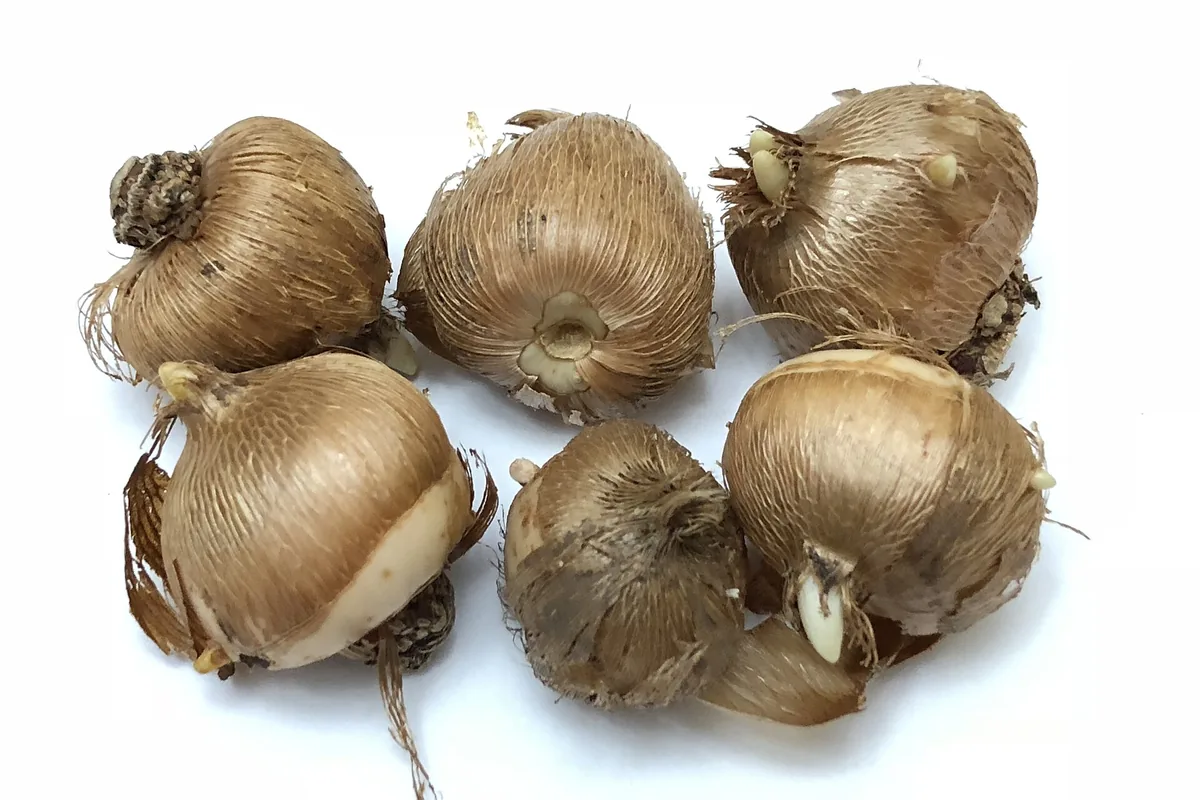
Spring bulbs, also sold as fall bulbs, are planted in fall and bloom in spring: crocus, hyacinths, alliums, grape hyacinths, snowdrops, Dutch iris, tulips, and daffodils. Summer bulbs, also called tender bulbs, are planted in spring and bloom in summer: dahlias, gladiolus, cannas, and caladiums (University of Maryland Extension). Daffodils go in first, tulips last, and the rest in between; where winters are mild, hyacinths and crocus are chilled first. The first frost date sets the fall window, and the USDA planting zone, also called a hardiness zone or growing zone, shows which bulbs come back. Enter a ZIP code below to see the spring bulb planting dates for the nearest NOAA weather station.
Which Bulbs Are Planted in Fall and Which in Spring?
Bulbs that bloom in spring are planted in fall, and bulbs that bloom in summer are planted in spring. Spring bulbs grow roots before the ground freezes and get the winter cold (vernalization) that makes a flower: most require a 12- to 16-week chilling period (Clemson Cooperative Extension). Summer bulbs are tender and go in after the last spring frost (University of Maryland Extension). Bearded iris rhizomes go in during summer.
| Bulbs | When to plant | What sets the date | Details |
|---|---|---|---|
| Daffodils | Fall: 3 weeks before to 3 weeks after the first frost | First fall frost | When to Plant Daffodil Bulbs |
| Crocus, hyacinths, alliums, grape hyacinths, snowdrops, Dutch iris | Fall: 2 weeks before to 4 weeks after the first frost | First fall frost; soil below 60°F | This page, below |
| Tulips | Fall: 1 week before to 5 weeks after the first frost | First fall frost; soil below 60°F | When to Plant Tulip Bulbs |
| Garlic (a bulb crop) | Fall: 1 week before to 4 weeks after the first frost, by November 30 | First fall frost | When to Plant Garlic |
| Bearded iris (rhizomes) | Summer: mid-July to September | 6 weeks after bloom | This page, iris section |
| Lilies | Early fall, or early spring | Bulbs on sale; ground not frozen | This page, lily section |
| Dahlias, gladiolus, cannas, caladiums | Spring: after the last frost | Last spring frost; soil 55–70°F | This page, summer bulbs |

Both frost dates for a ZIP code are on the First and Last Frost Dates by ZipCode page.
When to Plant Spring Bulbs by Type?
Spring bulbs such as crocus, hyacinths, alliums, grape hyacinths, snowdrops, Siberian squill, Dutch iris, and fritillaria go in from 2 weeks before to 4 weeks after the first fall frost, once the soil has cooled below 60°F. The table gives the planting depth, measured from the base of the bulb to the soil surface (Iowa State University Extension), the spacing, and what to do where winters are mild.
| Bulb | Depth and spacing | Mild winters (20–89 nights below 40°F) | Fewer than 20 cold nights |
|---|---|---|---|
| Crocus | 3–4 in deep, 3 in apart | Chill Dutch crocus 6–10 weeks and plant in December; Tommies and ‘Cloth of Gold’ come back | Chill 10–12 weeks; plant fresh corms each year |
| Hyacinth | 6 in deep, 6–8 in apart | Chill 6–10 weeks and plant in December | Chill 10–12 weeks; plant fresh bulbs each year |
| Allium | Large: 6–8 in deep, 12–18 in apart; small: 3–5 in deep, 6–8 in apart | Plant as they are; Naples onion, drumstick allium, and star of Persia suit the South | Not covered by extension guides |
| Grape hyacinth (muscari) | 3–4 in deep, 3–4 in apart | Plant as they are; they spread and come back | Plant as they are in coastal California; not covered for Florida |
| Dutch iris | 4–6 in deep, 3–4 in apart | Plant as they are, October to November | Plant as they are, December 1 to January 15 |
| Snowdrop | 3–4 in deep, 3 in apart | Grow poorly in hot areas; plant where winters have 90 or more cold nights | Do not bloom |
| Siberian squill | 3–4 in deep, 3 in apart | Cold-winter bulb; plant where winters have 90 or more cold nights | Do not bloom |
| Fritillaria (crown imperial) | 6–8 in deep, 12–18 in apart | Cold-winter bulb; plant where winters have 90 or more cold nights | Not covered by extension guides |
| Tulips | 6–8 in deep, 4–6 in apart | Chill first: When to Plant Tulip Bulbs | Chill 12–14 weeks; plant fresh bulbs each year |
| Daffodils | 6–8 in deep, 4–6 in apart | Southern types, no chilling: When to Plant Daffodil Bulbs | Paperwhites; chill others 8–10 weeks |
Depths and spacing: Iowa State University Extension and Clemson Cooperative Extension; mild-winter columns: Clemson Cooperative Extension, Texas A&M AgriLife, LSU AgCenter, UF/IFAS Extension, and the UC Master Gardeners of Sacramento and Orange counties.
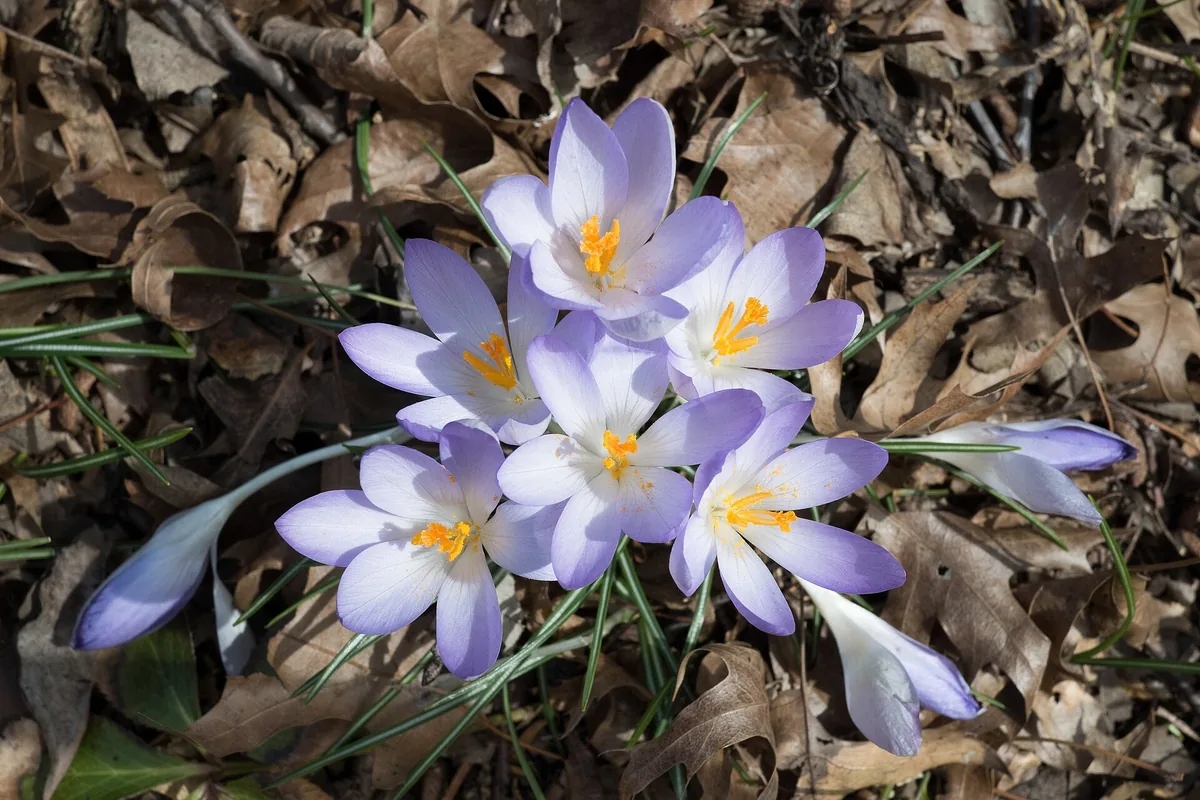
When to Plant Crocus Bulbs?
Plant crocus bulbs from 2 weeks before to 4 weeks after the first fall frost, 3–4 inches deep and 3 inches apart (Iowa State University Extension). Crocus bulbs are corms. Where winters have fewer than 90 nights below 40°F, chill the large Dutch crocus for 6–10 weeks (Texas A&M AgriLife) and plant it in December; Tommies, snow crocus, and ‘Cloth of Gold’ “grow throughout South Carolina” without chilling (Clemson Cooperative Extension).
When to Plant Hyacinth Bulbs?
Plant hyacinth bulbs once the soil has cooled below 60°F, late in the spring-bulb window, 6 inches deep and 6–8 inches apart (Clemson Cooperative Extension, Iowa State University Extension). Hyacinths behave like tulips: on the coast and the Gulf, give them 6–8 weeks in the refrigerator first (Clemson Cooperative Extension, LSU AgCenter). The flowers get smaller after the first year, so Clemson Cooperative Extension buys new bulbs each fall.
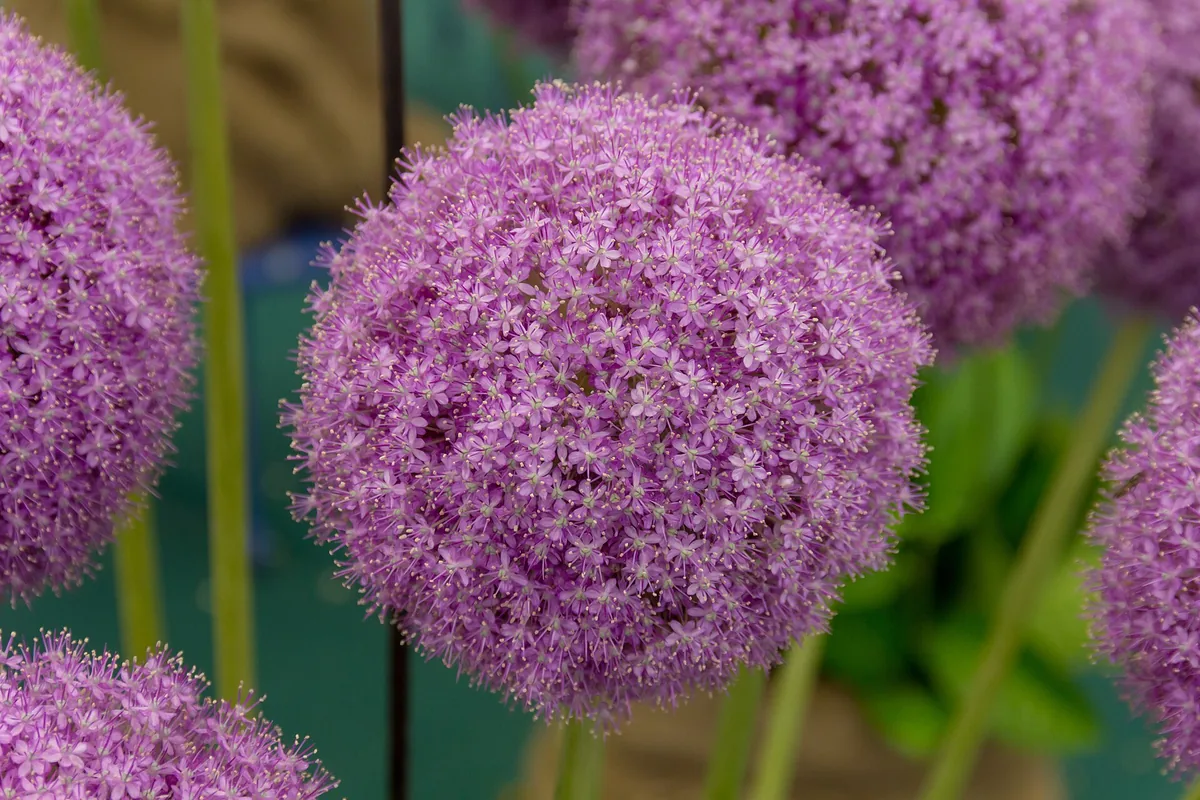
When to Plant Allium Bulbs?
Plant allium bulbs in fall: October in Iowa (Iowa State University Extension), September to November in Sacramento (UC Master Gardeners). Large bulbs go 6–8 inches deep and small ones 3–4 inches, and deer and rabbits rarely browse ornamental onions (Iowa State University Extension). For the South, Clemson Cooperative Extension recommends Naples onion, drumstick allium, and star of Persia.
When to Plant Grape Hyacinth, Snowdrop and Squill Bulbs?
Plant grape hyacinth, snowdrop, and squill bulbs early in the spring-bulb window, 3–4 inches deep (Iowa State University Extension); Colorado State University Extension calls late September “the preferred time to plant bulbs.” Grape hyacinths often send up leaves in fall and bloom the next spring (Iowa State University Extension). In the South, grape hyacinths “naturalize quickly,” but “true snowdrops don’t grow well in hot areas” (Clemson Cooperative Extension).
When to Plant Tulip and Daffodil Bulbs?
Daffodils go in first, from 3 weeks before to 3 weeks after the first fall frost, and tulips last, from 1 week before to 5 weeks after it: in Saint Paul, daffodils from September 20, the other spring bulbs from September 25, and tulips from October 5. Dates for every ZIP code: When to Plant Daffodil Bulbs and When to Plant Tulip Bulbs.
When to Plant Bulbs by USDA Zone?
Spring bulb planting windows run from September 5–October 20 in Zone 3 to October 15–December 15 in Zone 9, and December 1–January 15 in Zone 10. The table lists the typical first and last frost dates, the spring bulb planting window, and the bulb types for USDA planting zones 3 to 10, from NOAA 1991–2020 weather-station data for every ZIP code in each zone.
| Planting zone | Plant spring bulbs | First frost date (typical) | Last frost date (typical) | Bulb types |
|---|---|---|---|---|
| Zone 3 | Sep 5–Oct 20 | Sep 20 (Sep 2–Sep 26) | May 22 (May 18–Jun 7) | Any spring bulb |
| Zone 4 | Sep 10–Oct 25 | Sep 26 (Sep 18–Oct 3) | May 13 (May 5–May 26) | Any spring bulb |
| Zone 5 | Sep 20–Nov 1 | Oct 5 (Sep 25–Oct 14) | May 6 (Apr 29–May 21) | Any spring bulb |
| Zone 6 | Oct 1–Nov 10 | Oct 15 (Oct 3–Oct 24) | Apr 30 (Apr 17–May 11) | Any spring bulb |
| Zone 7 | Oct 10–Nov 20 | Oct 25 (Oct 14–Nov 11) | Apr 15 (Apr 4–Apr 30) | Any spring bulb |
| Zone 8 | Oct 15–Dec 1 | Nov 4 (Oct 26–Nov 14) | Mar 31 (Mar 15–Apr 13) | Any spring bulb in 76% of ZIP codes; chill hyacinths and crocus in 24% |
| Zone 9 | Oct 15–Dec 15 | Nov 30 (Nov 13–Dec 17) | Feb 25 (Jan 31–Mar 19) | Chill hyacinths and crocus in 84% of ZIP codes; any spring bulb in 9%; Dutch iris, or chill all others in 7% |
| Zone 10 | Dec 1–Jan 15 | Dec 25 (Dec 10–Jan 6); none in frost-free ZIP codes | Jan 28 (Jan 10–Feb 10); none in frost-free ZIP codes | Dutch iris, or chill all others in 78% of ZIP codes; chill hyacinths and crocus in 21%; any spring bulb in 1% |
Dates in the same zone differ because USDA zones measure winter lows, not frost timing. The ZIP code tool above gives the exact window for one garden.

When to Plant Bulbs in Zone 3?
In Zone 3, plant spring bulbs from September 5 to October 20. The first fall frost date is Sep 20 (Sep 2–Sep 26). 3% of Zone 3 ZIP codes, at mountain stations with frost in every month, plant in September only. More on the zone: USDA Planting Zone 3 with Map.
When to Plant Bulbs in Zone 4?
In Zone 4, plant spring bulbs from September 10 to October 25. The first fall frost date is Sep 26 (Sep 18–Oct 3); Duluth plants from September 10 and Fargo from September 15, within University of Minnesota Extension’s mid-September to mid-October. More on the zone: USDA Planting Zone 4 with Map.
When to Plant Bulbs in Zone 5?
In Zone 5, plant spring bulbs from September 20 to November 1. The first fall frost date is Oct 5 (Sep 25–Oct 14). Madison, Minneapolis, and Des Moines start on September 20, 25, and 30; Iowa State University Extension calls October “the ideal time to plant spring-flowering bulbs in Iowa.” More on the zone: USDA Planting Zone 5 with Map.
When to Plant Bulbs in Zone 6?
In Zone 6, plant spring bulbs from October 1 to November 10. The first fall frost date is Oct 15 (Oct 3–Oct 24). Denver plants from September 20, Colorado State University Extension’s “late September”; Chicago and Cleveland plant until late November. More on the zone: USDA Zone 6: Planting & Hardiness Map.
When to Plant Bulbs in Zone 7?
In Zone 7, plant spring bulbs from October 10 to November 20. The first fall frost date is Oct 25 (Oct 14–Nov 11). Every Zone 7 ZIP code grows any spring bulb: Louisville, St. Louis, Nashville, and Oklahoma City have 115–147 nights a year below 40°F, more than the 12–16 weeks of cold bulbs require. More on the zone: USDA Zone 7: Planting & Hardiness Map.
When to Plant Bulbs in Zone 8?
In Zone 8, plant spring bulbs from October 15 to December 1. The first fall frost date is Nov 4 (Oct 26–Nov 14), so the window starts on October 15, the latest start the site gives. 76% of Zone 8 ZIP codes, including Atlanta, Charlotte, Raleigh, Birmingham, and El Paso, grow any spring bulb; 24%, including Dallas and the Gulf Coast, chill hyacinths and crocus first. More on the zone: USDA zone 8 Map with its 25 states.
When to Plant Bulbs in Zone 9?
In Zone 9, plant spring bulbs from October 15 to December 15. 84% of Zone 9 ZIP codes, including Houston, Austin, Savannah, Jacksonville, and Sacramento, have 20–89 nights a year below 40°F: plant grape hyacinths, alliums, and Dutch iris as they are, and chill hyacinths and crocus 6–10 weeks before planting them in December. Seattle and Portland grow any spring bulb; Tampa and other ZIP codes with fewer than 20 cold nights follow the Zone 10 dates. More on the zone: USDA Planting Zone 9 with Map.
When to Plant Bulbs in Zone 10?
In Zone 10, plant Dutch iris, anemones, and ranunculus from December 1 to January 15 with no chilling; chill hyacinths and crocus 10–12 weeks first and plant fresh bulbs each year. 78% of Zone 10 ZIP codes, including Miami, Orlando, Los Angeles, and San Francisco, have fewer than 20 nights a year below 40°F: the UC Master Gardeners of Orange County plant ranunculus, anemones, and Dutch iris in November, and UF/IFAS Extension points Florida gardeners to amaryllis, crinum, and rain lilies. 21%, including parts of Phoenix, follow the Zone 9 dates, and Zone 11 follows Zone 10. More on the zones: USDA Zone 10 with Map and Zone 11.
When to Plant Summer Bulbs (Dahlias, Gladiolus, Lilies, Cannas, Caladiums)?
Plant summer bulbs in spring after the last frost, once the soil is at least 55°F (Clemson Cooperative Extension); University of Maryland Extension calls dahlias, gladiolus, caladiums, and cannas “tender” bulbs. The zone table above gives the typical last frost date, from May 6 in Zone 5 to March 31 in Zone 8; one ZIP code’s date is on the First and Last Frost Dates by ZipCode page.
| Bulb | When to plant | Soil temperature | Depth and spacing | Winter |
|---|---|---|---|---|
| Dahlia (tubers) | After the last frost; from mid-April in mild regions | 60°F | 4–6 in deep, laid on the side, eye up; 1–2 ft apart | Dig after the first frost in cold areas; mulch in milder ones |
| Gladiolus (corms) | After the last frost; again every 2 weeks until early July | 55°F | 4–6 in deep | Lift in cold areas; mulch overwinters them in most of South Carolina |
| Lily (bulbs) | Early fall, or early spring | Ground not frozen | 3 times the bulb’s width deep; 6–10 in apart | Stays in the ground |
| Canna (rhizomes) | After the last frost; start indoors in March in the North | 55°F | 1–2 in deep in South Carolina, 2–4 in in Sacramento; 12–24 in apart | Hardy in South Carolina; dig after frost in the North |
| Caladium (tubers) | When the soil reaches 70°F | 70°F | 1½–2 in deep, 8–14 in apart, eyes up | Dig before the first fall frost |
Sources: Washington State University Extension and Ask Extension (dahlias), Iowa State University Extension (gladiolus, lilies), University of Illinois Extension and the UC Master Gardeners of Sacramento County (cannas), Clemson Cooperative Extension (all five), and UF/IFAS Extension (caladiums).
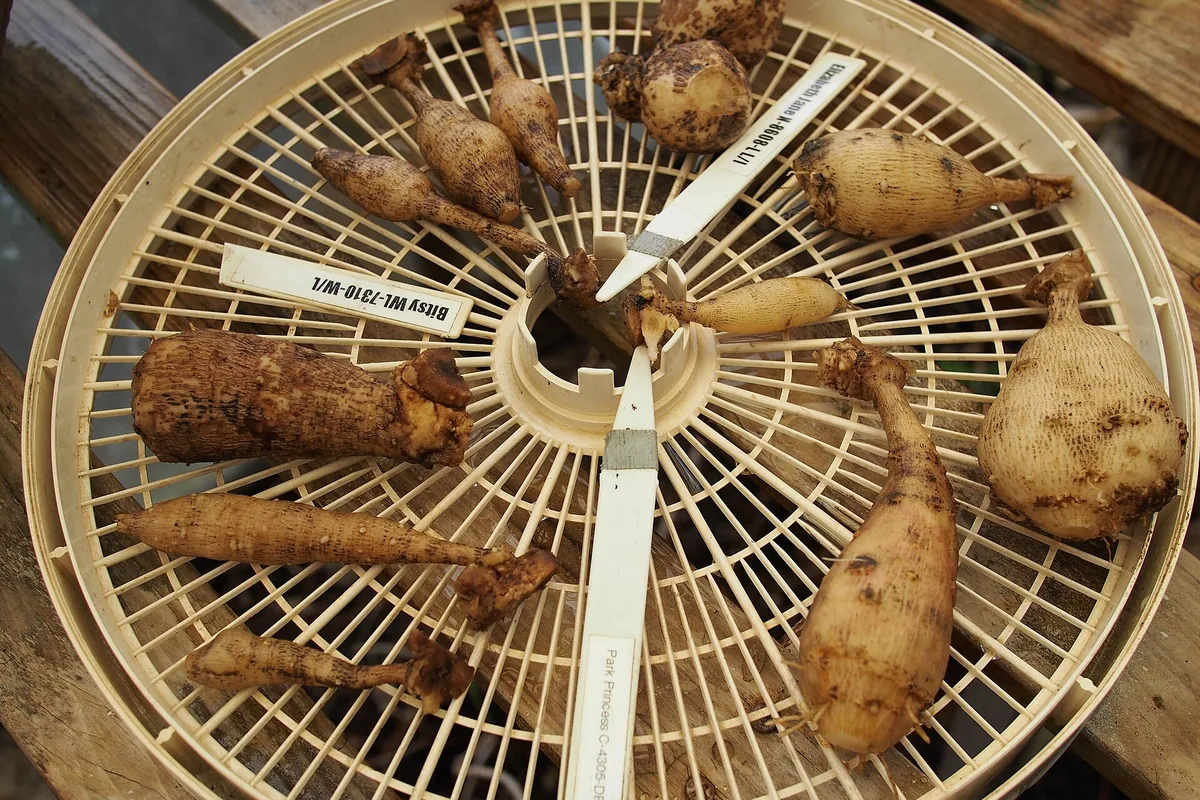
When to Plant Dahlia Tubers?
Plant dahlia tubers after the last frost, once the soil reaches 60°F: “The tuber won’t start growing until the soil warms to 60 degrees” (Washington State University Extension). Lay each tuber on its side, eye up, 4–6 inches deep and 1–2 feet apart. Where the ground freezes, cut the plant down after the first fall frost, dig the tubers a week later, and store them at 42–50°F (Washington State University Extension).
When to Plant Gladiolus Corms?
Plant gladiolus corms after the danger of frost is past, early to mid-May in Iowa, 4–6 inches deep (Iowa State University Extension). They bloom 8–10 weeks after planting, so plant every 2 weeks until early July for flowers all summer. With mulch, gladiolus overwinter in the ground in most of South Carolina (Clemson Cooperative Extension), and they grow anywhere in Florida with no chilling (UF/IFAS Extension).
When to Plant Lily Bulbs?
Plant lily bulbs in early fall, or in early spring as soon as they are on sale. Iowa State University Extension calls early fall “an excellent time to plant Asiatic, Oriental, and other garden lilies”; Clemson Cooperative Extension plants them “either in the fall or spring, whenever the bulbs are available,” under 4–6 inches of soil and 6–10 inches apart.
When to Plant Cannas and Caladiums?
Plant cannas after the last frost and caladiums once the soil reaches 70°F. University of Illinois Extension starts cannas indoors in March, plants them out “after danger of frost is past,” and digs the rhizomes “in the fall after frost”; in South Carolina, cannas are “reliably hardy” and stay in the ground (Clemson Cooperative Extension). Caladium tubers rot in cool soil; UF/IFAS Extension plants them from April in north and central Florida and from March in south Florida.
When to Plant Iris Bulbs?
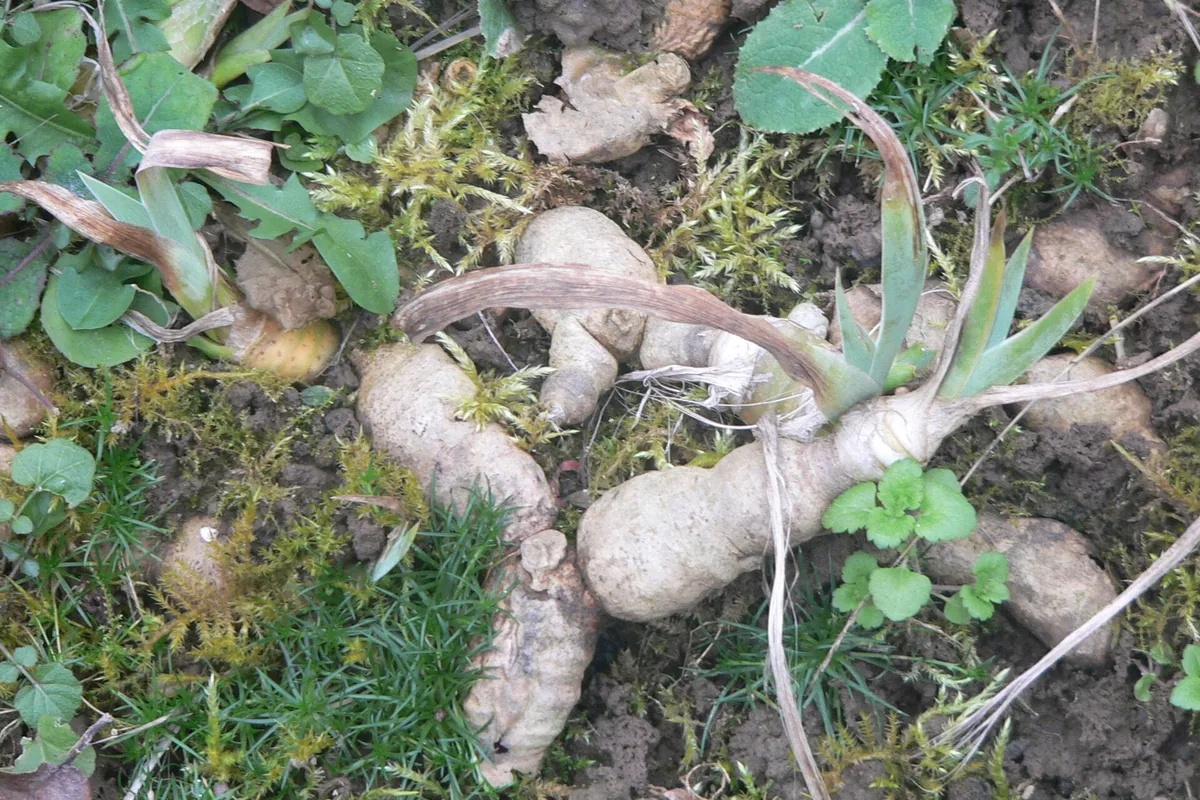
Bearded iris grow from rhizomes, planted from mid-July to September; Dutch iris grow from bulbs, planted in fall with the other spring bulbs. The two go in months apart.
When to Plant Bearded Iris Rhizomes?
Plant or divide bearded iris rhizomes from mid-July to early September in the North (Nebraska Extension), and “from six weeks after bloom is finished through September, or October near the coast” in the South (Clemson Cooperative Extension). Set the rhizome with its top at or just beneath the soil surface, 12–18 inches apart, and divide clumps every 3–5 years (University of Illinois Extension). Siberian, Japanese, and Louisiana irises are transplanted “during the summer and early fall” (Clemson Cooperative Extension).
When to Plant Dutch Iris Bulbs?
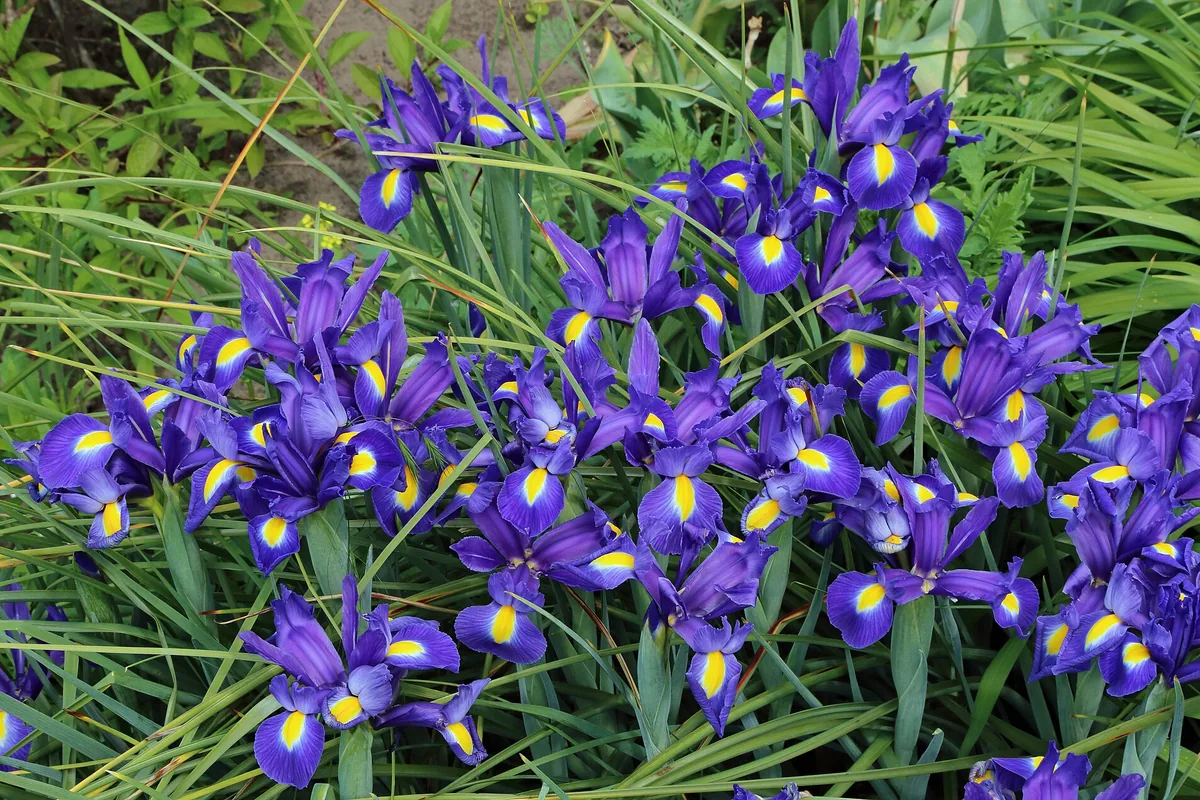
Plant Dutch iris bulbs in October or November, 4–6 inches deep (Clemson Cooperative Extension), with the other spring bulbs. They bloom without chilling and handle “soil that gets dry and warm in summer” (Clemson Cooperative Extension); the UC Master Gardeners of Sacramento County plant them from September to December, and in Zones 10–11 they go in from December 1 to January 15.
How Deep to Plant Bulbs?
Plant bulbs 2½–3 times as deep as the bulb is wide (University of Maryland Extension): 3–4 inches deep for crocus, grape hyacinths, and snowdrops, 6 inches for hyacinths, and 6–8 inches for large alliums, tulips, and daffodils (Iowa State University Extension). Measure from the base of the bulb to the soil surface. In loose, sandy soil, plant bulbs 1–2 inches deeper (Nebraska Extension).

How Far Apart to Plant Bulbs?
Plant large bulbs 4–6 inches apart and small bulbs 1–3 inches apart (Colorado State University Extension). Large alliums and crown imperials take 12–18 inches (Iowa State University Extension).
Can You Plant Bulbs in Spring?
Spring bulbs, no; summer bulbs, yes. For spring bulbs, “waiting until spring to plant them is not an option” (Iowa State University Extension): unplanted bulbs dry up over winter, and spring-planted bulbs lack the roots and the cold that make a flower. If fall planting was missed, pot the bulbs and give the pot 12–16 weeks of cold, or discard them. Summer bulbs are the ones to plant in spring: dahlias, gladiolus, cannas, caladiums, and lilies.
Is It Too Late to Plant Bulbs in Fall?
Spring bulbs can be planted as late as December, as long as the ground is not frozen (Iowa State University Extension); the dates on this page are the window for a full root system, not the last day. Bulbs planted after October “may not have time to root adequately” (Colorado State University Extension), so plant late bulbs at once rather than storing them. In Zone 9, the window runs to December 15; in Zones 10–11, to January 15.
When to Plant Bulbs in Pots?
Plant spring bulbs in pots in the same fall window as in the ground, then give the pot 12–16 weeks of cold (Iowa State University Extension). “15 crocus, four to six daffodils, three hyacinths or six tulip bulbs will fit in a 6-inch pot” (Nebraska Extension). Oregon State University Extension keeps pots in a protected spot outdoors and moves them inside below 28–30°F. Where winters are mild, chill hyacinths, crocus, and tulips for at least 6 weeks before potting (UC Master Gardeners of Sacramento County).
How to Find the Bulb Planting Date for a ZIP Code?
To find the spring bulb planting date for a ZIP code, use the tool at the top of this page in 3 steps:
- Enter the 5-digit ZIP code and select Show planting dates.
- Read the planting window: the first line gives the dates in words, and the second line gives exact dates, the planting zone, and the bulb types that bloom there.
- Open How this date was calculated to see the first fall frost date, the nearest weather station, and its distance.

How Are Bulb Planting Dates Calculated?
Spring bulb planting dates on this page come from NOAA 1991–2020 weather-station records. For each ZIP code, the tool takes the nearest station’s first fall frost date (32°F; in 7 of 10 years the first frost comes later) and applies a rule built from university extension guidance: plant spring bulbs from 2 weeks before to 4 weeks after that frost, starting between September 1 and October 15 and ending by December 15. The number of nights a year below 40°F decides which bulbs go straight in the ground; summer-bulb dates are a soil-temperature rule read against the last frost. The full method is on How We Calculate Frost and Planting Dates.
| Where you garden | Spring bulb planting rule | Source |
|---|---|---|
| Cold and cool winters: 90 or more nights a year below 40°F (Zones 3–8, Seattle and Portland) | Plant any spring bulb from 2 weeks before to 4 weeks after the first fall frost, once the soil has cooled below 60°F; start between September 1 and October 15, finish by December 15. | Iowa State University Extension, Nebraska Extension, Colorado State University Extension, University of Minnesota Extension, University of Illinois Extension, Clemson Cooperative Extension, N.C. Cooperative Extension |
| Mild winters: 20–89 nights below 40°F (Dallas–Fort Worth, central and south Texas, the Gulf Coast, north Florida, California valleys) | Same window; plant grape hyacinths, alliums, Dutch iris, and summer snowflakes as they are; chill hyacinths and crocus 6–10 weeks and plant them in December. | Clemson Cooperative Extension, Texas A&M AgriLife, LSU AgCenter, UC Master Gardeners of Sacramento County |
| Mild or frost-free winters: fewer than 20 nights below 40°F (central and south Florida, coastal California) | Plant Dutch iris, anemones, and ranunculus from December 1 to January 15 with no chilling; chill hyacinths and crocus 10–12 weeks first and plant fresh bulbs each year. | UF/IFAS Extension, UC Master Gardeners of Orange County, UC Master Gardeners of Sacramento County, Texas A&M AgriLife |
| Mountain areas with frost in every month | Plant spring bulbs in September, at least 4 weeks before the ground freezes. | Colorado State University Extension, University of Illinois Extension |
To recap: when to plant bulbs depends on the first frost date for your ZIP code and your USDA planting zone. Plant spring bulbs from 2 weeks before to 4 weeks after the first fall frost in Zones 3–9, chilling hyacinths and crocus where winters are mild; plant Dutch iris from December 1 to January 15 in Zones 10–11; and plant summer bulbs after the last spring frost. Bulbs with their own pages: When to Plant Tulip Bulbs, When to Plant Daffodil Bulbs, and When to Plant Garlic; for the rest of the fall garden, see What to Plant in November and When to Plant.