

Sacramento, California is entirely within USDA planting zone 9b, characterized by a Mediterranean climate with hot summers (average annual minimum temperatures: 25°F-30°F/-3.9°C to -1.1°C) and mild winters. The zone encompasses all neighborhoods including Midtown, East Sacramento, and Natomas, extending to metropolitan communities like Citrus Heights and Elk Grove.
Zone 9b supports diverse plant species: vegetables (tomatoes, peppers), herbs (rosemary, thyme), and fruit trees (citrus, figs). Drought-resistant ornamentals like California lilac (Ceanothus) thrive in its 281-day growing season, with spring planting starting late February and fall crops established by August for continuous harvests.
Sacramento Planting Zones by ZipCode
Planting Zones Sacramento Map
Select or type your Sacramento location in the selection box below, to get its USDA planting zone info. Use the layer button to on/off layers, top right corner button in mapview.
City Name
Sacramento Area Planting Zone
Planting Zones
Planting Zones
Sacramento Planting Zones Table
| Sacramento Locations | Planting Zone |
|---|---|
| Loading Sacramento zones data… | |
No items found matching your search
Try a different search term or clear the search field.
Zone 9b

Zone 9b’s prevalence in the Sacramento metropolitan area is primarily due to its geographical location within the Central Valley region of California. This area’s flat terrain and proximity to two major rivers create climate with average annual minimum temperatures ranging from 25°F to 30°F (-3.9°C to -1.1°C).
The Central Valley’s elevation, typically between 0 to 100 feet above sea level, helps in moderating temperatures and creating suitable conditions for Zone 9b plants. Sacramento itself has an average elevation of about 30 feet above sea level, which contributes to its consistent climate across the urban area.
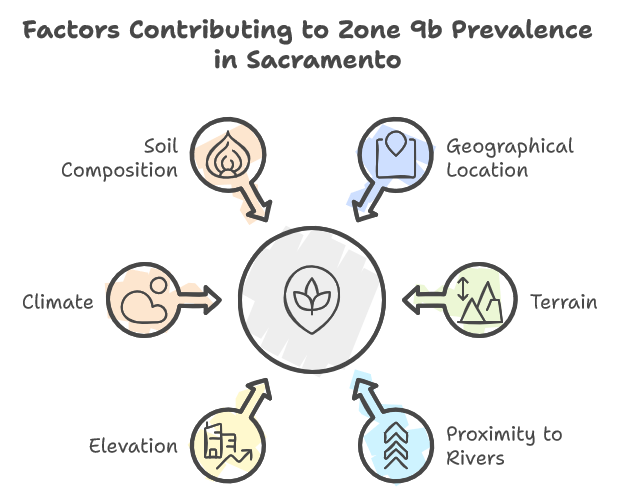
The characteristic soil of Sacramento is a direct result of the region’s Mediterranean climate and geological history. The soil is generally acidic, with pH levels ranging from 5 to 5.3, and includes a mix of Nitisols, Arenosols, and Acrisols. This soil composition affects water retention and nutrient availability, which influences the types of plants that thrive in this zone.
Some main areas in this zone with their zip codes are 95811 and 95814 (Downtown Sacramento), 95816 and 95818 (Midtown and Land Park), 95823 (South Sacramento), 95834 (Natomas), 95819 (East Sacramento), 95825 (Arden-Arcade), 95608 (Carmichael), 95610 (Citrus Heights), 95670 (Rancho Cordova), 95758 (Elk Grove), and 95630 (Folsom).
Best performing Plants for Sacramento?
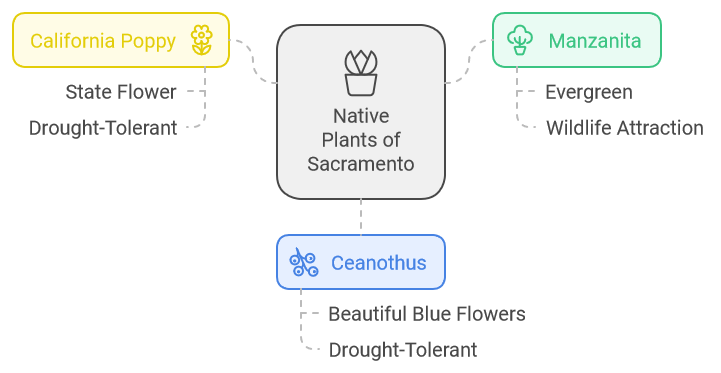
Plants that thrive in Sacramento’s region include a variety of trees, shrubs, perennials, grasses, and annuals adapted to the local climate. Native plants are particularly well-suited to Sacramento’s climate and require less water and maintenance:
Native Plants:
- California Poppy: The state flower, adapted to local conditions.
- Manzanita: An evergreen shrub that’s drought-tolerant and attracts wildlife.
- Ceanothus: Also known as California lilac, this shrub offers beautiful blue flowers.
Trees:
- Crape Myrtle: Drought-tolerant with beautiful summer blooms and fall color
- Chinese Pistache: Excellent fall foliage and urban-tolerant
- Valley Oak: Native California tree well-adapted to Sacramento’s climate
Shrubs:
- Lavender: Thrives in sunny conditions with low water needs
- Rosemary: Drought-tolerant Mediterranean plant
- California Lilac: Native shrub that attracts pollinators
Perennials:
- Triteleia laxa (Ithuriel’s spear): Native geophyte for grasslands and open savannas
- Salvia: Various sage varieties perform well and attract pollinators
- Echinacea: Drought-tolerant with summer-long color
Grasses:
- Blue Fescue: Drought-tolerant ornamental grass
- Purple Needlegrass: California’s state grass, well-adapted to local conditions
Annuals:
- Sunflowers: Heat-loving and thrive in sunny summers
- Zinnia: Colorful and easy to grow in the local climate